 Save to Pinterest
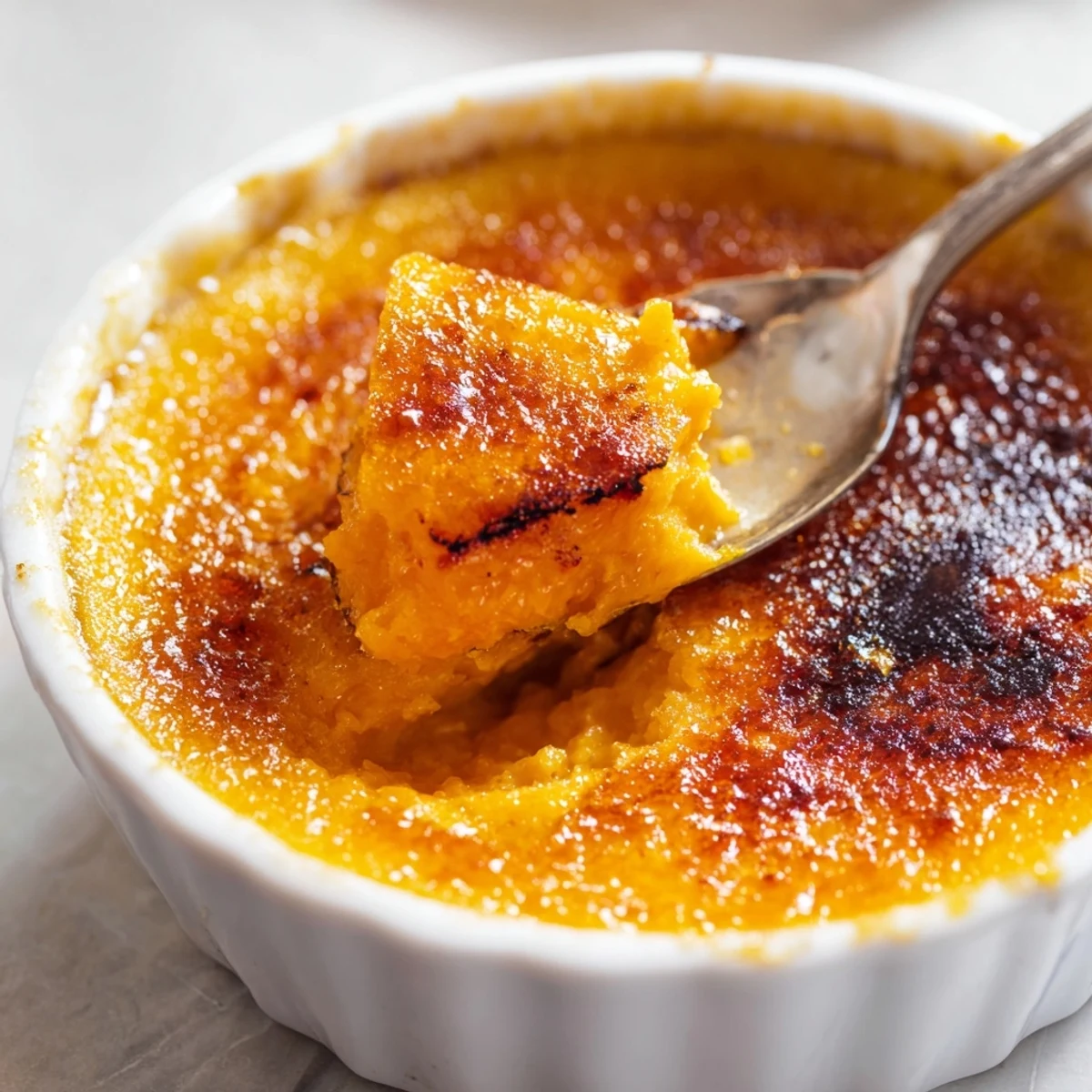
 This indulgent dessert marries the velvety smoothness of traditional French custard with the naturally sweet, nutty profile of Japanese sweet potato. The result is a silky, pale-orange custard that's both familiar and exotic.
The magic happens in two stages: first, a gentle water bath creates the impossibly smooth base, then a final torching transforms sugar into that signature crackling caramelized crust. The earthy sweetness of the potato perfectly balances the rich custard, while the burnt sugar adds satisfying contrast.
Best served chilled after at least two hours in the refrigerator, letting flavors meld and textures set. The juxtaposition of cool, creamy interior and warm, crisp topping makes each spoonful memorable.
The first time I brought these to a dinner party, someone actually asked if I'd smuggled them from a hidden patisserie in Tokyo. That gorgeous sunset orange hue catches people off guard, but that first crackle of the torch and the revelation of sweet, earthy custard underneath? That's what makes friends start texting you for the recipe the next morning.
I discovered this recipe during a rainy weekend when I'd bought way too many sweet potatoes at the market and couldn't face making another batch of roasted ones. My kitchen smelled incredible while the custards baked, and my roommate kept wandering in asking if we could please eat them now. They were worth every minute of the wait.
Ingredients
- Japanese sweet potato: These have a naturally creamy texture and gorgeous color that regular sweet potatoes just cant match
- Heavy cream: Creates that luxurious silky texture we all crave in crème brûlée
- Whole milk: Lightens things up slightly while keeping the custard rich and smooth
- Egg yolks: The secret to proper custard structure and that velvety mouthfeel
- Granulated sugar: Sweetens the custard and creates that signature caramelized crust
- Vanilla extract: Rounds out the earthy sweetness beautifully
- Salt: Just a pinch makes all the flavors pop
- Extra sugar for brûléeing: You need enough to create a proper crackling shell on top
Instructions
- Preheat and prepare your water bath:
- Set your oven to 150°C (300°F) and put a kettle on to boil the water you'll need later
- Cook the sweet potato:
- Steam or boil those cubes until they're falling apart tender, about 15 minutes, then drain them
- Make a silky purée:
- Blend the cooked sweet potato with the cream and milk until absolutely smooth with no lumps
- Whisk your egg base:
- In a separate bowl, beat the egg yolks with sugar, vanilla, and salt until pale and smooth
- Combine everything gently:
- Slowly pour that sweet potato mixture into the eggs while whisking constantly so you don't scramble anything
- Strain for perfection:
- Push everything through a fine mesh sieve to catch any bits and ensure restaurant-smooth custard
- Fill your ramekins:
- Divide the custard evenly among four ramekins and set them in a deep baking pan
- Create the water bath:
- Pour boiling water into the pan until it reaches halfway up the sides of the ramekins
- Bake until just set:
- Carefully slide the pan into the oven and bake for 30–35 minutes until the custard wobbles like gelatin when gently shaken
- Chill thoroughly:
- Lift the ramekins out, let them cool to room temperature, then refrigerate for at least 2 hours
- The moment of truth:
- Sprinkle a tablespoon of sugar over each custard and torch until golden and crisp
- Let the caramel harden:
- Wait about 3 minutes for that shell to set before serving
 Save to Pinterest
 My aunt tasted these and immediately declared she was serving them at her next book club meeting. There's something about breaking through that caramelized sugar and hitting the sweet, creamy custard that makes people pause their conversations and really savor the moment.
Getting the Perfect Crackle
A kitchen torch gives you the most control and that satisfying glass-like shell. If you use the broiler, watch like a hawk because sugar goes from perfect to burned in seconds. The secret is an even layer of sugar about as thick as a nickel.
Making Them Ahead
The custards themselves keep beautifully in the fridge for up to two days. Just wait to brûlée the tops until right before serving, because that caramel shell starts to weep and lose its crunch after about an hour.
Flavor Variations
A tablespoon of bourbon or amontillado sherry adds warmth that plays nicely with the sweet potato. Some toasted black sesame seeds pressed into the hot sugar make for a stunning Japanese-inspired finish.
- Try coconut milk in place of regular milk for a tropical twist
- A pinch of cinnamon or cardamom creates lovely warmth
- Candied yam pieces on top make an adorable garnish
 Save to Pinterest
 There's nothing quite like that first spoon breaking through caramel into creamy custard. I hope these bring as much joy to your table as they've brought to mine.
Recipe Q&A
- → Can I make this ahead of time?
-
Absolutely! The custard bases can be prepared up to 2 days in advance and stored in the refrigerator. Add the caramelized sugar topping just before serving for that signature crunch. The custard actually develops deeper flavor after resting overnight.
- → What makes Japanese sweet potatoes different?
-
Japanese sweet potatoes (satsumaimo) have a naturally sweeter, nuttier flavor and drier texture compared to orange-fleshed varieties. They create a beautiful pale-orange custard with subtle earthiness that pairs beautifully with rich cream and eggs.
- → Do I need a kitchen torch?
-
While a kitchen torch gives you the most control and that professional appearance, you can also caramelize under your oven's broiler. Watch closely—it only takes 1-2 minutes. The torch is worth it for the precision and ease.
- → Why do I need to strain the mixture?
-
Straining through a fine mesh sieve removes any fibrous bits or air bubbles, ensuring an impossibly smooth, silky texture. This extra step makes the difference between good and exceptional custard, especially important for this elegant dessert.
- → Can I substitute other sweet potatoes?
-
You can use regular orange sweet potatoes or yams, though the flavor profile will change—expect a more pronounced sweetness and brighter color. Purple sweet potatoes work too for a stunning visual effect, though they're slightly less sweet.
- → Why is my custard still wobbly after baking?
-
That's actually perfect! The custard should be just set but still slightly wobbly in the center when you remove it from the oven. It continues cooking as it cools and fully sets during chilling. Overbaking leads to a rubbery, curdled texture.