 Save to Pinterest
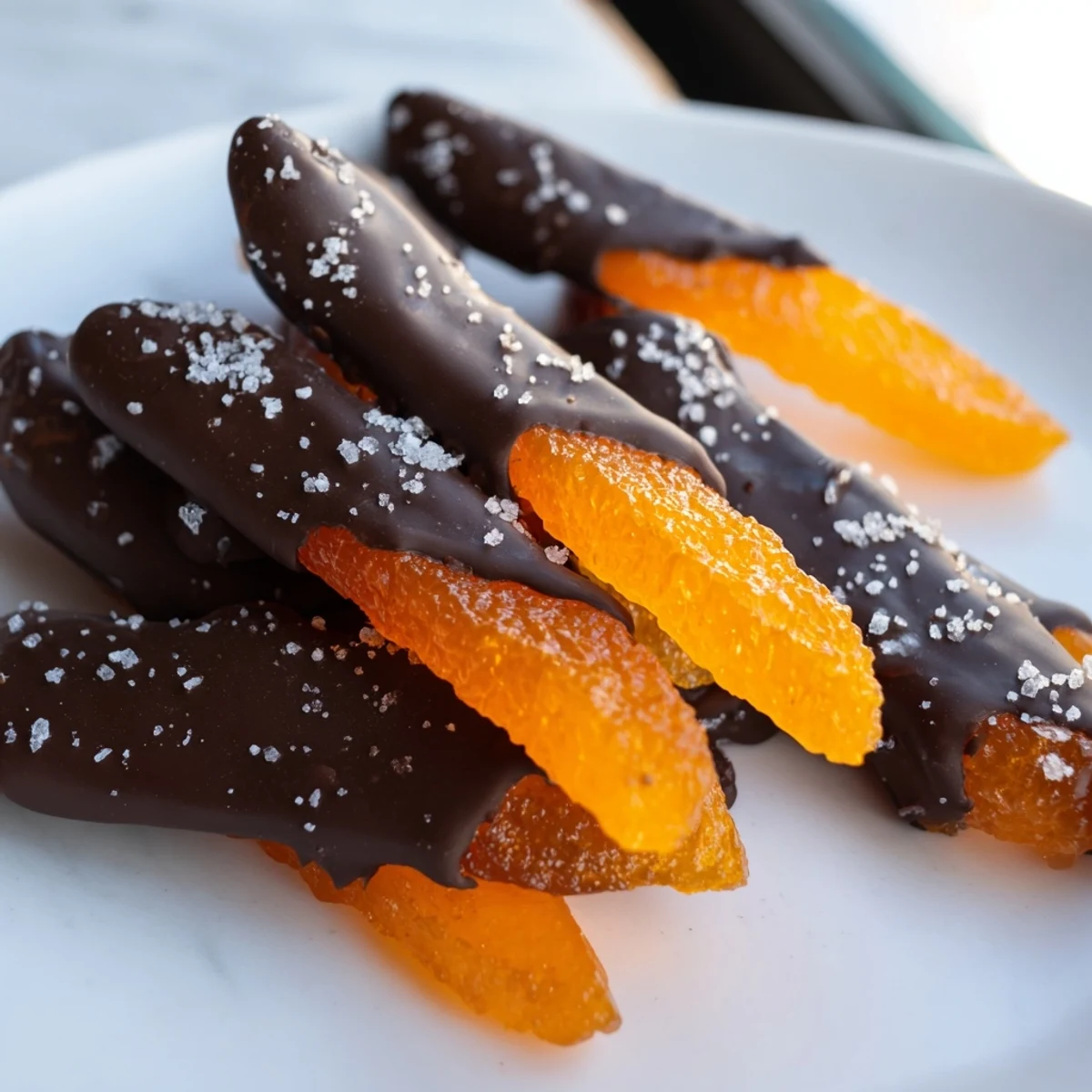
 These chocolate covered orange peels transform simple citrus into an elegant confection. Orange peels are blanched to remove excess bitterness, then slowly simmered in a sugar syrup until glossy and translucent.
Once dried, each candied strip is dipped halfway into melted dark chocolate and left to set. A sprinkle of flaky sea salt adds a satisfying sweet-salty finish.
The process takes a bit of patience — mostly hands-off drying and cooling time — but the results are well worth it. They store beautifully in an airtight container for up to two weeks, making them ideal for homemade gifts, holiday dessert boards, or an afternoon pick-me-up alongside a cup of tea.
The smell of orange peel hitting boiling water is one of those scents that rewires your brain a little, sharp and sweet at the same time, like the kitchen itself is waking up. I started making these chocolate dipped orange peels one rainy December when I needed gifts and had exactly three oranges and a bar of Lindt on hand. They turned out so absurdly good that I now make them every year, not out of tradition but because nothing else scratches that particular itch.
My neighbor Clara knocked on my door the afternoon I made my second batch, supposedly to return a measuring cup, but she stood in the doorway sniffing the air like a cartoon character floating toward a pie. I sent her home with a small plate of them and she returned the next day with an empty plate and zero shame.
Ingredients
- 3 large oranges: Navel or Valencia work beautifully, choose ones with thick, unblemished skins because you want substantial peel to work with.
- 1 cup granulated sugar: Plain white sugar creates the clearest, shiniest candy coating, do not swap for brown sugar.
- 1 cup water: Just enough to dissolve the sugar and bathe the peels, measured precisely.
- 200 g dark chocolate, at least 60% cocoa: Spend a little more here, the chocolate is half the experience and cheap bars will taste waxy and flat.
- 1 tsp flaky sea salt, optional: Maldon or any flaky salt adds a tiny crunch that makes people close their eyes when they bite in.
Instructions
- Prep the oranges:
- Wash the oranges thoroughly under warm water, scrubbing gently to remove any wax coating. Score each peel from top to bottom in four vertical lines, then peel them off in large curved pieces, keeping a thin layer of white pith attached because it carries floral notes you want.
- Cut into strips:
- Slice the peels into uniform strips about half a centimeter wide, which sounds fussy but ensures even cooking and pretty results.
- Blanch three times:
- Drop the strips into a saucepan of cold water, bring to a rolling boil for two minutes, then drain completely. Repeat this two more times, and yes it feels tedious, but each round pulls out harsh bitterness and leaves behind pure orange essence.
- Make the syrup:
- Combine the sugar and water in your saucepan and bring it to a gentle simmer, stirring until the sugar disappears and the liquid runs clear.
- Candy the peels:
- Add the blanched peels to the syrup and let them simmer gently for forty minutes, stirring occasionally so nothing sticks, until the strips turn glossy and translucent around the edges.
- Dry the peels:
- Lift the peels out with tongs and arrange them on a wire rack set over parchment paper, spacing them apart so they do not touch, and let them dry for at least one hour until tacky but not wet.
- Melt the chocolate:
- Set a heatproof bowl over a saucepan of barely simmering water, making sure the bowl does not touch the water, and stir the chocolate until it melts into a glossy, satiny pool.
- Dip and finish:
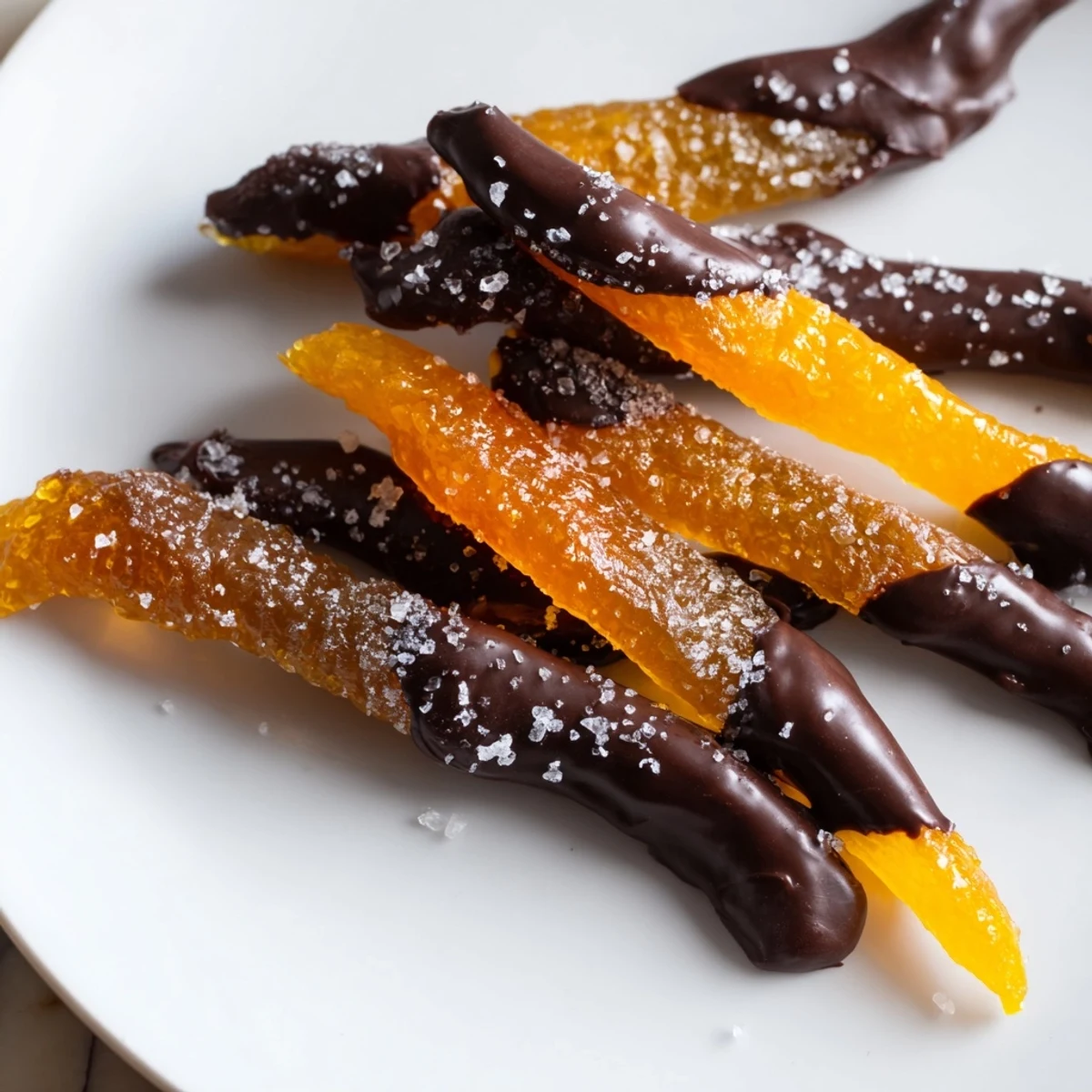
- Take each peel and dip it halfway into the chocolate, letting the excess drip off for a few seconds before placing it on fresh parchment. Sprinkle with flaky salt while the chocolate is still wet, then leave them alone for thirty minutes until fully set.
 Save to Pinterest
 I packed a tin of these for my mother one year and she called me at midnight to say she ate every single one while watching a documentary about penguins, which is possibly the most honest review anyone has ever given my cooking.
Getting the Texture Right
The peels should feel slightly chewy but not gummy when you bite them, and that texture depends entirely on how long you let them dry before dipping. If they are too wet, the chocolate slides right off and pools around the edges into messy little puddles that never fully set.
Choosing Your Chocolate
I learned the hard way that supermarket own brand baking chocolate turns grainy and dull no matter what you do, so buy something you would happily eat straight from the wrapper. A bar between sixty and seventy percent cocoa gives you enough sweetness to balance the citrus without overwhelming it.
Storage and Gifting
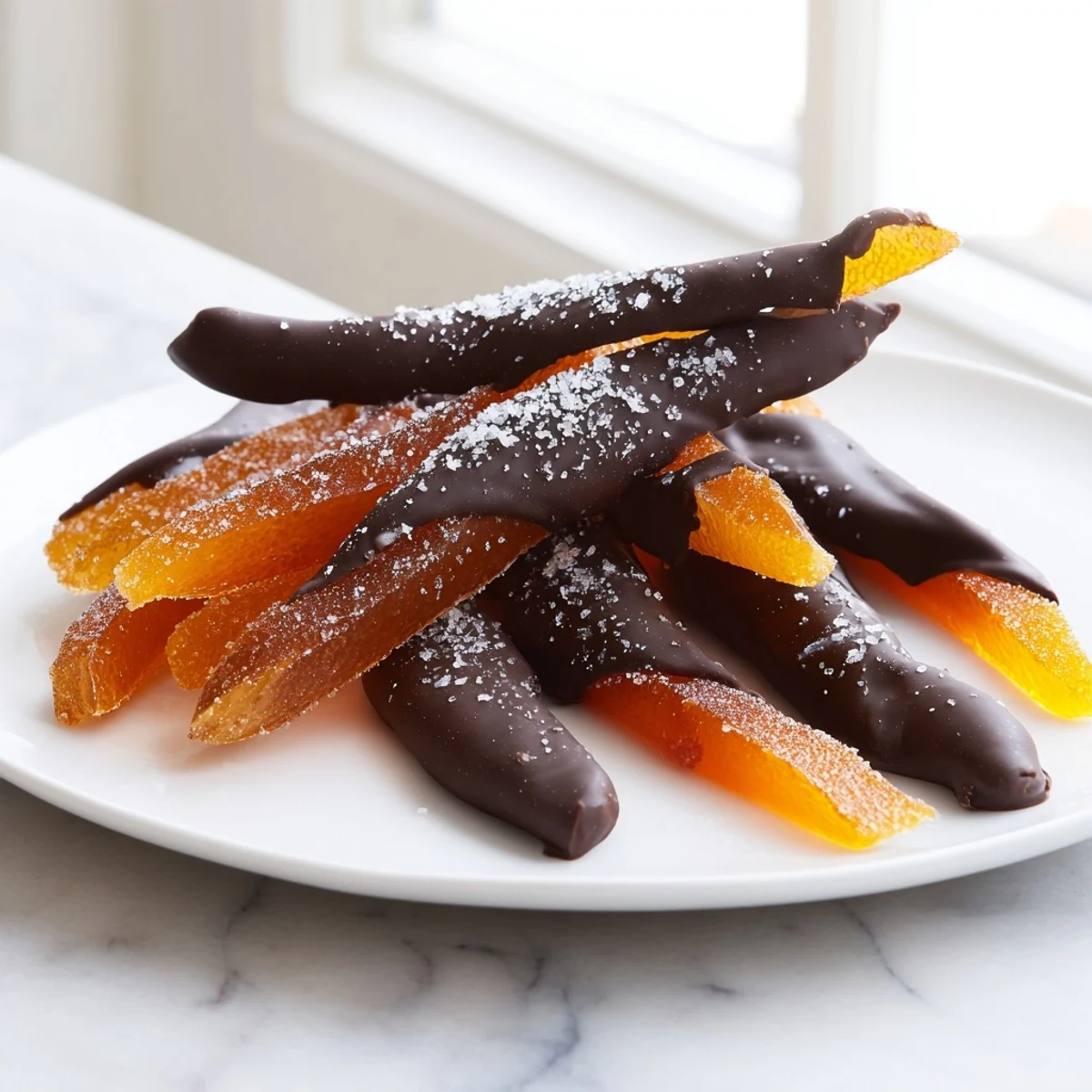
Layer the finished peels between sheets of parchment in an airtight container and they will stay perfect at room temperature for two full weeks. For gifts, small metal tins or cellophane bags tied with kitchen twine look charming and keep them from sticking together.
- Keep them out of direct sunlight or the chocolate will bloom and develop white streaks.
- Avoid the refrigerator because condensation makes the chocolate spotty and the peels soggy.
- Always check your chocolate label for allergens if you are gifting to someone with dietary restrictions.
 Save to Pinterest
 Once you have made these once, you will start looking at every citrus fruit in your kitchen as potential candy. They are that rewarding, and honestly that easy, to justify making on any random Tuesday.
Recipe Q&A
- → How do I reduce the bitterness in orange peels?
-
Blanching is the key. Boil the peels in fresh water for 2 minutes, drain, and repeat the process two more times. This triple-blanching method draws out the bitter compounds from the white pith, leaving behind a pleasant citrus flavor.
- → Can I use milk or white chocolate instead of dark?
-
Absolutely. Milk or white chocolate will work for dipping, though dark chocolate (at least 60% cocoa) provides the best contrast against the sweet candied peels. If using white chocolate, consider adding a touch of orange zest to the coating for extra flavor.
- → Why are my candied peels not turning translucent?
-
Translucency comes from slow, gentle simmering in the sugar syrup. Keep the heat low and give them the full 40 minutes. If the syrup boils too hard, the peels may toughen rather than soften. Patience and a gentle simmer yield the best texture.
- → How should I store chocolate covered orange peels?
-
Store them in an airtight container at cool room temperature for up to two weeks. Avoid refrigerating them, as condensation can cause the chocolate to bloom and lose its glossy finish. If your kitchen is very warm, a cool pantry or cupboard works well.
- → Can I use other types of citrus for this method?
-
Yes — grapefruit, lemon, and even Meyer lemon peels work beautifully with the same blanching and candying technique. Adjust the blanching rounds as needed; grapefruit peels may benefit from a fourth blanch to tame their stronger bitterness.
- → Do I need to temper the chocolate before dipping?
-
Tempering isn't strictly necessary, but it gives the chocolate a snappy, glossy finish that holds up better at room temperature. A simple double-boiler melt works fine for home preparation if you plan to store and eat them within a few days.