 Save to Pinterest
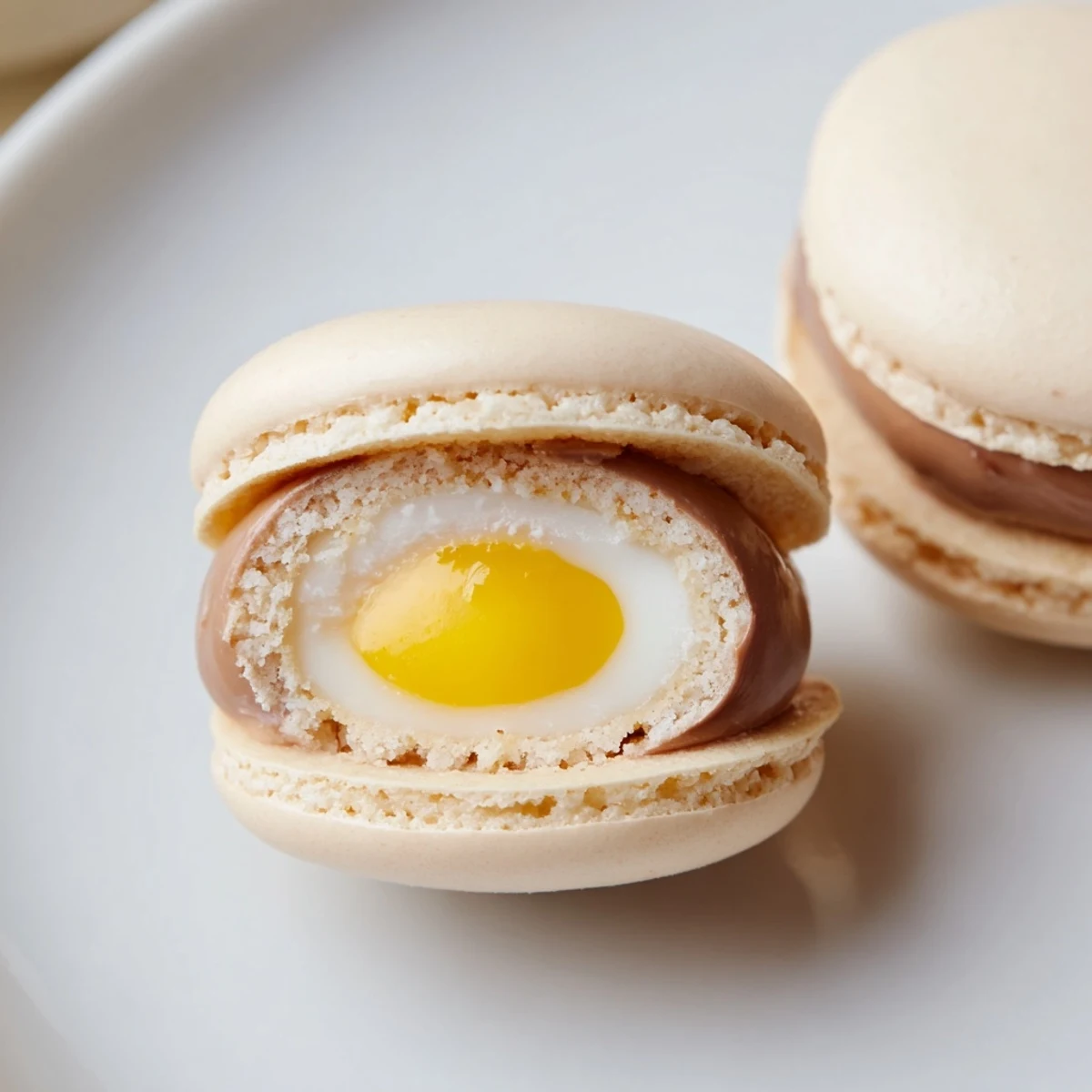
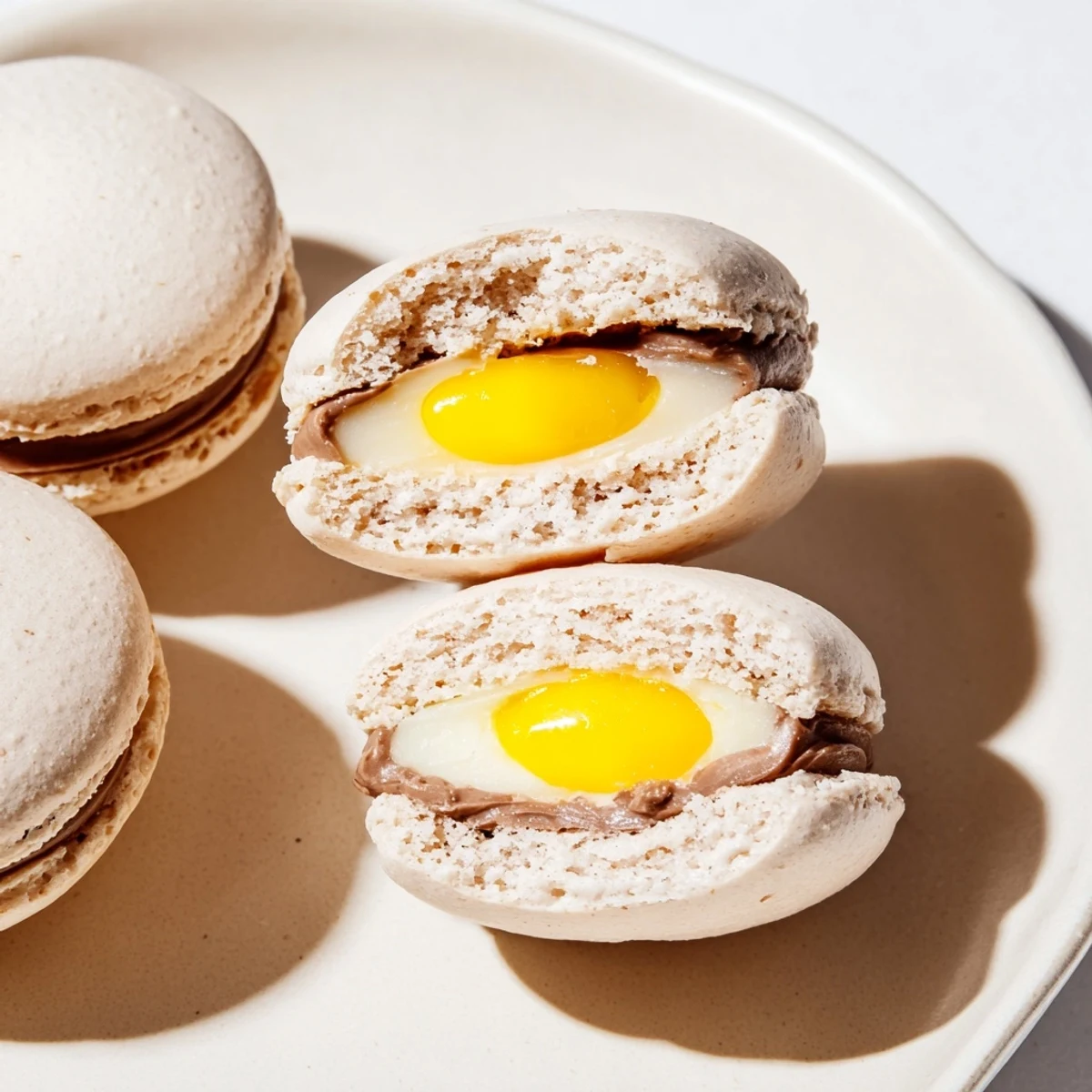
 These delicate French macarons feature crisp almond shells sandwiching a luscious milk chocolate ganache inspired by Cadbury Creme Eggs. The filling mimics the iconic egg with a white chocolate ring and golden yellow center, creating a stunning visual effect perfect for Easter.
The shells require careful macaronage technique to achieve the perfect texture, while the creamy milk chocolate filling uses Cadbury Dairy Milk for authentic flavor. Assembly involves piping a ring of chocolate filling and adding a dollop of yellow-tinted ganache in the center to recreate the classic egg look.
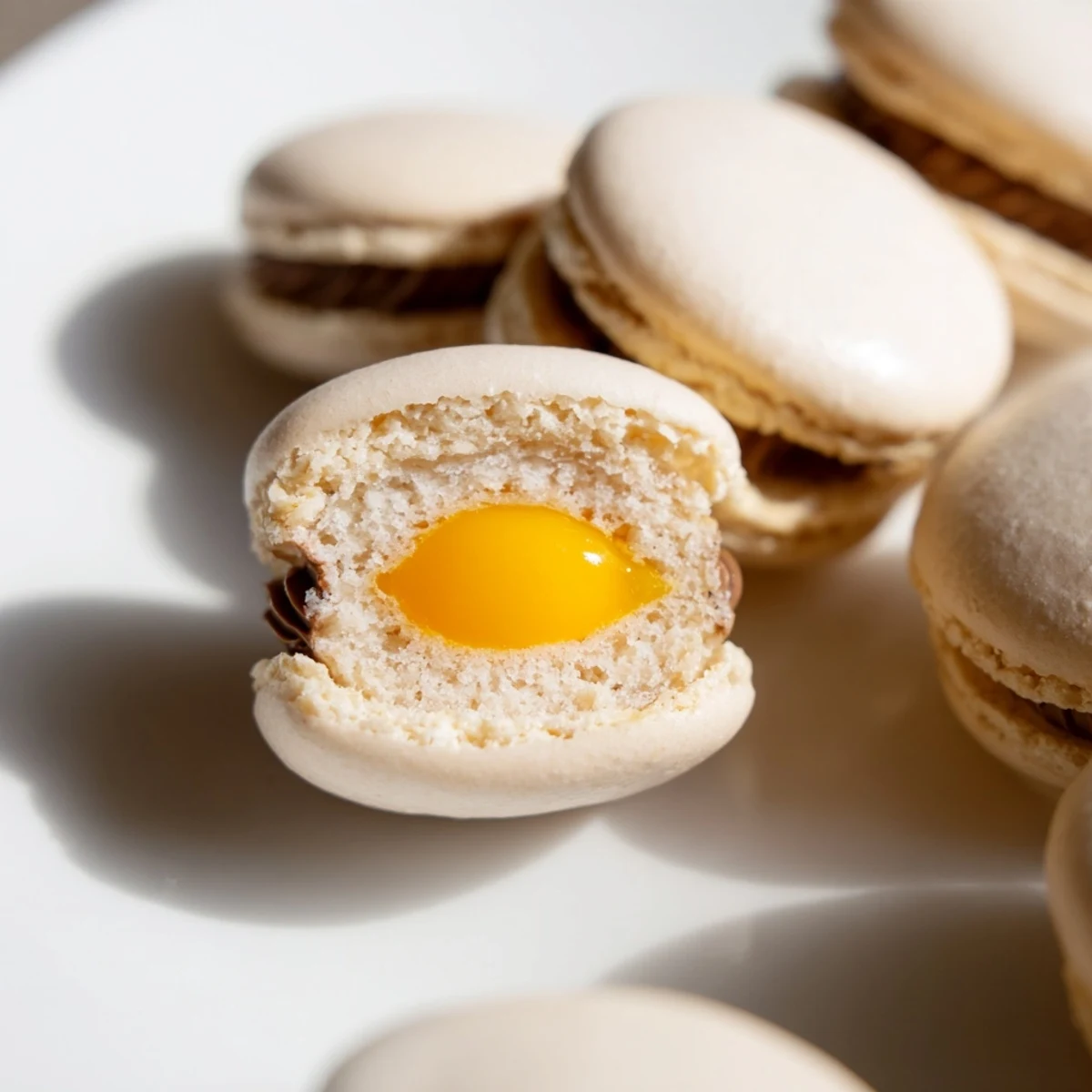
Best enjoyed after maturing overnight, these handheld treats store beautifully for up to five days. The vibrant yellow centers peek through the white filling, making them an impressive addition to spring celebrations.
My kitchen counter looked like a pastel explosion the first time I attempted macarons, almond dust coating every surface and little yellow batter splatters where my piping bag had sprung a leak. These weren't just any macarons though—they were my love letter to Cadbury Creme Eggs, that nostalgic Easter treat that somehow tastes like childhood in chocolate form. After three failed batches and one very patient husband taste-testing rejects, I finally nailed that perfect smooth shell with the signature feet.
I brought these to our neighborhood Easter potluck last spring, setting them carefully on a tiered cake stand I'd bought specifically for macaron display. My neighbor's daughter immediately grabbed two, whispering that they looked like tiny edible treasures from a French bakery. By the time I went back for seconds, the plate was empty except for a few stray crumbs and a note asking for the recipe.
Ingredients
- Almond flour: Must be finely ground and sifted or your shells will have gritty spots
- Powdered sugar: Essential for that smooth glossy shell texture
- Egg whites: Room temperature is non negotiable for proper meringue formation
- Granulated sugar: Adds structure and stability to your meringue
- Cream of tartar: The secret weapon for stiff glossy peaks
- Food coloring: Gel coloring works best to avoid thinning your batter
- Milk chocolate: Cadbury Dairy Milk gives that authentic flavor we love
- Heavy cream: Creates that luscious ganache texture
- Golden syrup: Makes the filling smooth and prevents it from being too firm
- Unsalted butter: Adds silkiness and helps the filling hold its shape
- Yellow gel coloring: For that perfect egg yolk center surprise
Instructions
- Prep your workspace:
- Line two baking sheets with silicone mats or parchment paper and fit a pastry bag with a half inch round tip
- Sift your dry ingredients:
- Combine almond flour and powdered sugar in a bowl, sifting at least twice to remove any lumps
- Make the meringue:
- Whisk egg whites and cream of tartar until soft peaks appear, then gradually add sugar while whipping to stiff glossy peaks
- Macaronage technique:
- Fold almond mixture into meringue in three additions, mixing until batter flows in thick ribbons and disappears back into itself within 30 seconds
- Pipe perfect rounds:
- Transfer batter to pastry bag and pipe 32 small rounds, holding the bag perpendicular to the baking sheet
- Rest the shells:
- Tap pans firmly on counter to release air bubbles, then let shells sit for 30 to 60 minutes until dry to the touch
- Bake to perfection:
- Bake at 150°C (300°F) for 13 to 15 minutes, rotating halfway through, until shells easily lift from the mat
- Make the chocolate ganache:
- Heat cream until simmering then pour over chocolate, wait 2 minutes, stir until smooth and add golden syrup
- Create the yolk filling:
- Reserve one quarter of the ganache and mix with yellow gel coloring, chill both fillings until thickened
- Assemble your eggs:
- Pipe a ring of chocolate filling on one shell, add a small yellow dollop in the center, and gently sandwich with another shell
 Save to Pinterest
 These have become my go-to Easter contribution, appearing at brunch tables and tucked into Easter baskets for friends. Something about that surprise yellow center transforms them from ordinary cookies into tiny edible celebrations.
Mastering The Macaronage
The French term macaronage refers to that crucial folding technique where you deflate the meringue just enough. I count my folds now—around 50 to 60 strokes usually gives me that perfect lava flow consistency. The batter should ribbon off your spatula and slowly melt back into itself.
Troubleshooting Hollow Shells
Hollow shells happen when oven temperature fluctuates too much or the shells are underbaked. I invested in an oven thermometer and learned that 300°F on my dial actually means 285°F inside. Now I bake at a true 300°F for the full 15 minutes without opening the door.
Storage And Maturation Secrets
Macarons need to rest in the refrigerator for at least 24 hours to reach their ideal texture. During this time the moisture from the filling softens the shells slightly, creating that signature chewy exterior with soft interior.
- Store in an airtight container with parchment between layers
- Bring to room temperature 20 minutes before serving
- These freeze beautifully for up to one month
 Save to Pinterest
 There is something profoundly satisfying about finally mastering macarons after multiple attempts. These Cadbury inspired versions bring that special joy of combining technical skill with nostalgic childhood flavors.
Recipe Q&A
- → Why must macaron shells rest before baking?
-
Resting allows the shells to form a dry skin on the surface, which helps them develop their signature raised edges and smooth tops during baking. Without this resting period, the shells may crack or spread unevenly in the oven.
- → Can I use dark chocolate instead of milk chocolate?
-
Yes, dark chocolate works beautifully and creates a richer, less sweet filling. The pairing with almond shells remains delicious, though the flavor profile will differ from the classic Cadbury taste.
- → How do I know when macaronage is complete?
-
The batter is ready when it flows in thick, continuous ribbons off the spatula and disappears back into itself within 20-30 seconds. Over-mixing produces flat shells, while under-mixing causes lumpy surfaces.
- → Why is cream of tartar added to the egg whites?
-
Cream of tartar stabilizes the egg whites, helping them reach stiff peaks more easily and hold their structure during folding. It also makes the meringue more forgiving for beginners tackling macarons.
- → Can I freeze the macaron shells?
-
Absolutely! Baked shells freeze beautifully for up to 3 months in an airtight container. Thaw at room temperature for 30 minutes before filling. Freeze unfilled only—filled macarons develop moisture issues when frozen.
- → What causes hollow macaron shells?
-
Hollows typically result from oven temperature being too high or under-baked shells. Ensure your oven is properly calibrated and bake until the shells easily lift from the mat without sticking.